

If there is one thing that ruins the convenience of a modern kitchen, it’s opening your dishwasher after a two-hour cycle only to find a pool of murky, foul-smelling water sitting at the bottom of the tub.
As an appliance technician, I get calls about this every single week. Homeowners usually panic, assuming their home’s plumbing is wrecked or the dishwasher motor is dead. But nine times out of ten, the culprit is simply a clogged drain line.
Before you call a plumber and spend $150 on a service visit, you need to know how your machine actually gets rid of water. Unlike your sink, which uses thick PVC or metal pipes, your dishwasher uses a flexible, ribbed plastic tube called a drain hose. Because of those ridges, food particles, solidified grease, and broken glass love to get stuck in there.
Today, I’m going to show you exactly how to clean your dishwasher pipes safely, and more importantly, what dangerous internet “hacks” you need to avoid so you don’t accidentally destroy your machine.
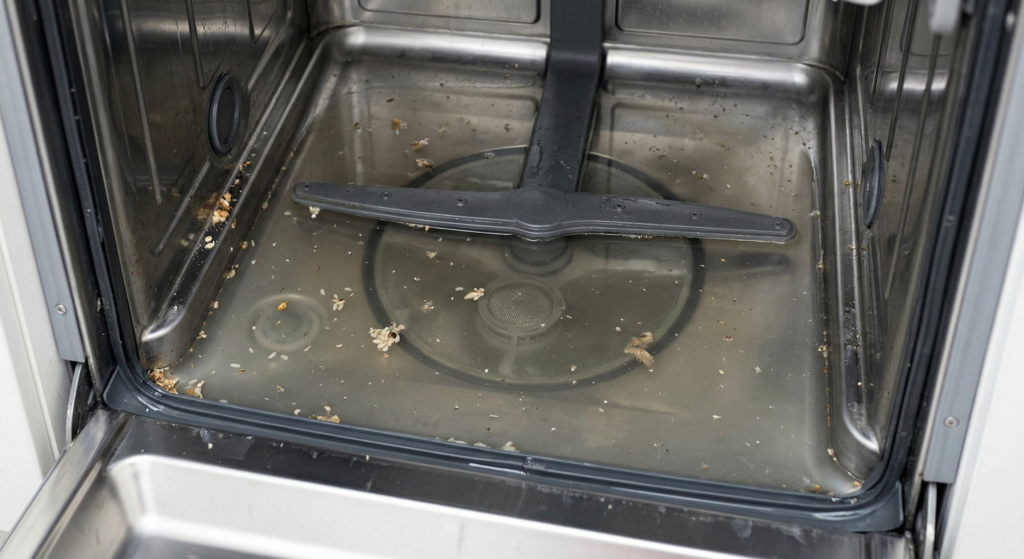
3 Signs Your Dishwasher Drain Hose is Clogged
How do you know if the pipe is the actual problem? Look out for these three classic red flags:
1. Standing Water After a Cycle
A perfectly functioning dishwasher should have a completely dry tub (or maybe a tablespoon of clean water in the very bottom of the filter pit) after a cycle. If water is pooling up to the heating element, your machine is failing to pump it out.
2. Gurgling Sounds Mid-Wash
Dishwashers make a lot of noise, but if you hear a strained, deep “gurgling” or “chugging” sound coming from under your sink while the machine is running, it means the drain pump is fighting against a blockage in the hose.
3. The Kitchen Sink is Backing Up
Your dishwasher drain hose is directly connected to your kitchen sink’s plumbing (usually right at the garbage disposal). If you run the dishwasher and gross water starts bubbling up into your sink basin, the clog is either at the connection point or deep in your home’s main pipes.
Stop! Check These 3 Things Before Touching the Pipes
Before we start unhooking hoses, let’s check the easy stuff. In my experience at the workbench, “clogged pipes” are often just a blockage right at the exit door.
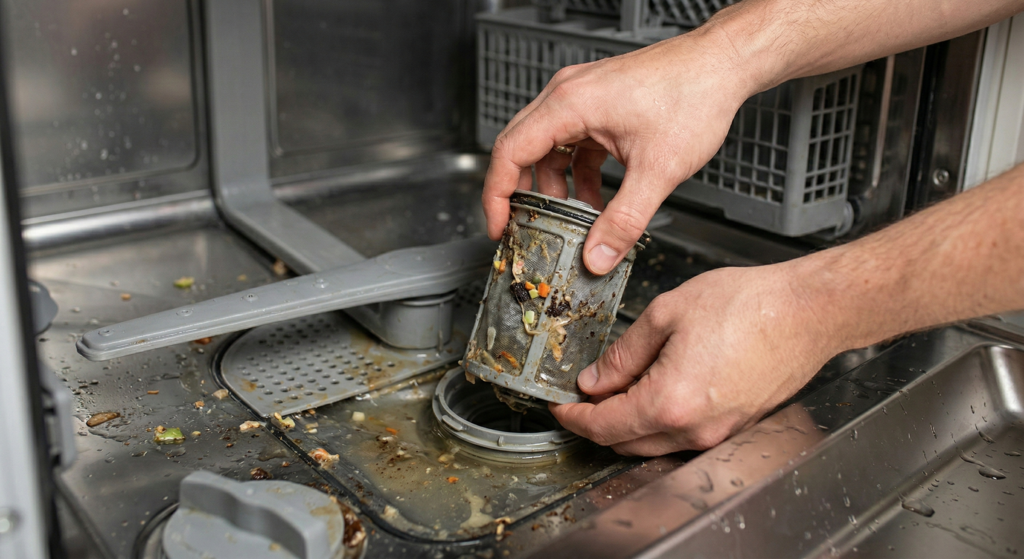
1. The Dishwasher Filter (The Usual Suspect)
Look at the bottom of your dishwasher tub. There is a twist-out cylindrical filter down there. If you haven’t cleaned it in six months, it’s probably caked in a slimy layer of old food and grease, completely blocking water from even reaching the drain hose. Twist it out, scrub it under the sink with an old toothbrush and some dish soap, and see if your machine drains.
2. The Garbage Disposal Connection
Where does your dishwasher drain hose go? Follow it under the sink. It usually clamps onto the side of your garbage disposal. Food from the disposal can actually shoot backward into the tip of the dishwasher hose and form a plug. Run your garbage disposal with plenty of hot water for a full minute to clear the chamber.
3. The Air Gap on the Sink
Do you have a little metal cylinder sitting on the back of your sink next to the faucet? That’s an air gap, and it prevents dirty sink water from siphoning back into your dishwasher. Pop the metal cover off, remove the plastic cap underneath, and use a pair of tweezers to pull out any gunk stuck inside
How to Clean Dishwasher Pipes (The Expert Methods)
If the filter and disposal are clear, the clog is officially inside the corrugated drain hose. Here is how we fix it.
Method 1: The Baking Soda & White Vinegar Flush (Routine Maintenance)
If your dishwasher is draining slowly but isn’t completely stopped up, this natural method is your best friend. It breaks down light grease without harming the rubber seals inside the drain pump.
-
Empty the Machine: Remove all dishes and the bottom dish rack.
-
The Baking Soda: Pour 1 full cup of baking soda into the standing water (or right into the filter pit if it’s empty).
-
The Vinegar: Pour 1 cup of distilled white vinegar over the baking soda. It will immediately start fizzing. This chemical reaction breaks apart the greasy sludge lining the ribbed hose.
-
Let it Sit: Close the door and leave it alone for 30 minutes.
-
The Hot Water Flush: Boil a kettle of water, let it cool for about 3 minutes (you want it very hot, but not actively boiling, to protect the plastic), and pour it down the drain. Run the dishwasher on its shortest, hottest cycle to flush the pipes clear.
Method 2: Manual Hose Removal (The Guaranteed Fix)
If you ask any professional plumber on Reddit how to fix a clogged dishwasher hose, they will all tell you the same thing: pull it off and clean it manually. If there is a chunk of bone or a pistachio shell stuck in there, baking soda won’t do a thing.
-
Cut the Power: Unplug the dishwasher or flip the circuit breaker.
-
Grab a Bucket: Place a bucket or a bunch of old towels under the kitchen sink.
-
Unhook the Hose: Find where the corrugated hose attaches to your sink plumbing or disposal. Use a pair of slip-joint pliers to squeeze the spring clamp and slide it back. Wiggle the hose off the plastic nozzle. (Water will spill out, so keep that bucket handy!)
-
Clear the Blockage: Take the hose outside and shoot a garden hose through it to blast the clog out. If it’s hopelessly jammed with hardened grease, do yourself a favor: go to the hardware store and buy a brand-new drain hose for $15. It’s cheaper and easier than fighting a decade-old grease plug.
Dangerous DIY Advice You Must Avoid (Don’t Wreck Your Machine)
The internet is full of terrible appliance advice. If you want to keep your warranty intact, never do these three things:
Never Use a Wire Coat Hanger
I recently read a blog post suggesting you shove a wire coat hanger into the dishwasher pipe to break up a clog. Absolutely do not do this. Dishwasher hoses are made of thin, flexible plastic. A rigid metal wire will instantly puncture the side of the hose. The next time you run the machine, it will pump gallons of dirty water directly into your custom kitchen cabinets.
Keep Chemical Drain Cleaners Out of Your Dishwasher
Can you use Liquid-Plumr or Drano in a dishwasher? No. Even the manufacturers of these chemicals explicitly state you should keep them out of appliances. Your dishwasher’s drain pump relies on delicate rubber gaskets to stay watertight. Highly corrosive chemical drain cleaners will melt those rubber seals, causing the motor to leak from the bottom of the machine.
Be Careful with Bleach
While bleach is great for sanitizing, it is highly reactive with stainless steel. If you pour straight bleach into a stainless steel dishwasher tub and let it sit, it can cause pitting, rust, and permanent discoloration. Stick to vinegar for odor control.
Frequently Asked Questions from the Workbench
How do you fix a smelly dishwasher?
The smell is usually rotting food trapped in the pipes or filter. Clean the filter first. Then, place a dishwasher-safe bowl filled with 1 cup of white vinegar on the top rack of an empty dishwasher. Run a heavy, hot-water cycle. The vinegar will neutralize the odors and break down the lingering bacteria in the hose.
Can I run my dishwasher if my sink is clogged?
No. Your dishwasher uses the exact same drain pipe as your kitchen sink. If your sink is backed up, running the dishwasher will simply pump 3 to 5 gallons of water directly into the already-clogged sink, causing it to overflow onto your countertops and floor. Plunge or snake the sink first.
What is the “Knockout Plug” mistake?
If you just installed a brand-new garbage disposal and your dishwasher won’t drain, you probably forgot to remove the “knockout plug.” New disposals come with a solid plastic plug inside the dishwasher connection port. You have to take a hammer and a screwdriver and literally knock that plastic plug out before attaching the dishwasher hose, or the water has nowhere to go.
Final Thoughts: Prevention is the Best Cure
A dishwasher is a wonderful luxury, but it is not a garbage disposal. The absolute best way to keep your dishwasher pipes crystal clear is to change your loading habits.
You don’t need to “pre-wash” your dishes (in fact, you shouldn’t, as modern detergents need a little food grease to activate properly). However, you absolutely must scrape them. Scrape the bones, the fruit pits, the chunks of pasta, and the big globs of mashed potatoes into the trash before loading.
Take 10 minutes this weekend to check your filter and do a vinegar flush. Your plumbing—and your wallet—will thank you.
Still struggling with a stubborn drain or a gurgling sink? Leave a comment below with your dishwasher’s brand and model, and I’ll help you troubleshoot the problem!