
Let’s be honest: dishwasher pods are the ultimate lazy-kitchen hack. You just grab a squishy little square, toss it into the machine, press a button, and walk away. It’s no wonder they’ve completely taken over the detergent aisle.
But as an appliance repair tech who spends half his life staring at the inside of broken dishwashers, I have a secret to share: most people are using them completely wrong. I can’t tell you how many times I’ve been called out to a house because a customer’s machine was leaving glasses cloudy or plates covered in baked-on lasagna crust, only to find out the dishwasher was totally fine. The culprit? User error with the pods.
If you want to stop re-washing your dishes and keep your appliance running for the next decade, grab a cup of coffee. We are going to break down exactly how to use dishwasher pods like a pro, and I’m going to debunk some wild myths I’ve seen floating around the internet.
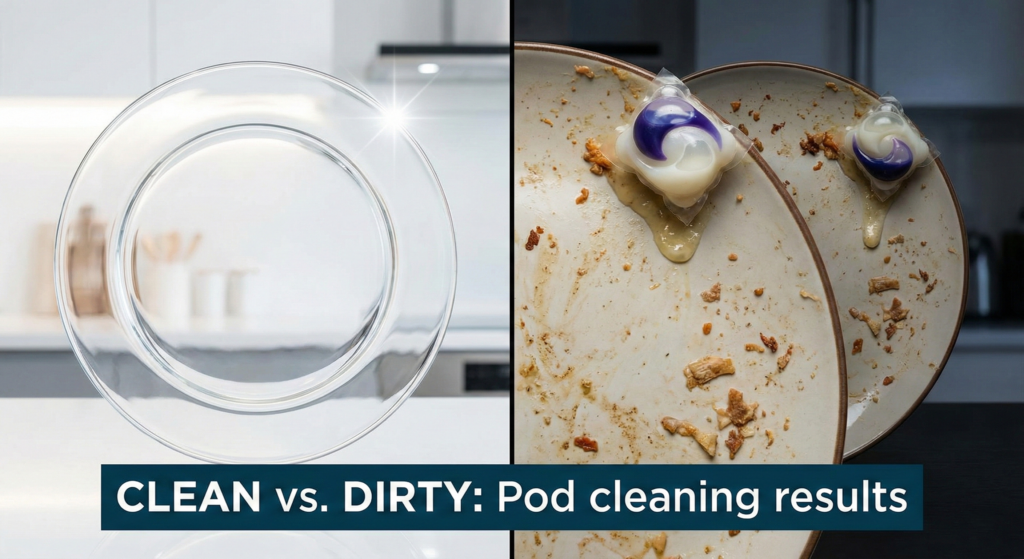
What Exactly is in a Dishwasher Pod?
Before we talk about how to use them, you need to understand what you’re actually holding. I watched a video the other day where a guy was looking at a Cascade Platinum pod and saying, “It has purple for… I don’t know what purple does. And green for… I don’t know what green does.”
Let’s clear that up. A high-quality pod (like Finish Quantum or Cascade Platinum) is a highly engineered little chemical bomb.
The Gel, The Powder, and That Little Wrapper
-
The Powder: This is the heavy lifter. It contains bleach and enzymes. The enzymes literally eat proteins and starches (like egg yolks and oatmeal), while the bleach tackles stains like coffee and tea.
-
The Liquid/Gel Sections (The Green, Blue, or Purple stuff): These are usually degreasers designed to break down fats, plus built-in rinse aids to help water sheet off your glasses so they dry without water spots.
-
The Wrapper: That plastic-like film isn’t actually plastic. It’s a water-soluble polymer called PVA (polyvinyl alcohol). It is designed to melt instantly when it comes into contact with hot water.
Step-by-Step: How to Properly Load and Use a Pod
Using a pod seems foolproof, but skipping these steps is exactly how you end up with a gunky machine.
Step 1: Check Your Water Temperature
Dishwasher pods are formulated to dissolve best in water that is between 125°F and 140°F. If your water is too cold, the PVA film won’t melt properly, and the powder will just turn into a hard, sticky lump. Pro-Tip: Run the hot water at your kitchen sink for 30 seconds before you start the dishwasher to prime the lines.
Step 2: Dry Hands, Dry Dispenser
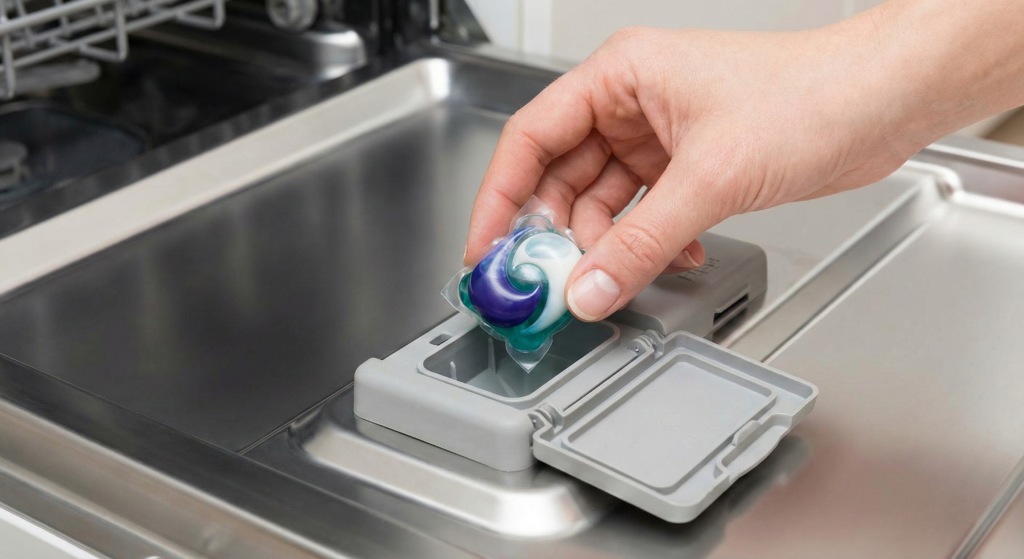
This is the number one mistake I see. Because the PVA wrapper is designed to melt on contact with water, grabbing a pod with wet hands is a disaster. If your hands are wet, the pod gets sticky. If you shove a sticky pod into a wet detergent dispenser, it will literally glue itself to the plastic cup. When the machine opens the dispenser door during the wash, the pod just stays stuck there instead of falling into the tub.
Step 3: Proper Placement (And Why the Door Matters)
Always, always put the pod in the main detergent dispenser cup and snap the little lid shut. Do not just throw it into the bottom of the machine (more on why that’s terrible in a minute). The dispenser is on a timer; it keeps the pod safe and dry until the exact moment the machine actually needs the soap.
Step 4: Don’t Forget the Rinse Aid
Even though many premium pods claim to have rinse aid built-in, you should still keep your dishwasher’s separate rinse aid reservoir filled. The machine releases liquid rinse aid at the very end of the cycle, long after the pod’s built-in rinse aid has been washed down the drain. If you want bone-dry, spot-free plastics, fill that reservoir.
The Great Debate: Pods vs. Powder vs. Liquid Gel
If you spend any time on forums like reddit, you’ll see massive arguments about whether pods are actually a scam. As a technician, I have to admit: the Reddit nerds are kind of right.
The Pre-Wash Dilemma
Here is a secret about how dishwashers work: almost every normal cycle starts with a 10 to 15-minute “pre-wash.” The machine fills with water, sprays the loose food off the dishes, drains that dirty water, and then fills up again for the main wash.
When you use loose powder or gel, you can fill the main cup, and spill a little extra on the door. That extra soap mixes with the pre-wash water to give your machine a massive head start on breaking down grease.
When you use a pod, it’s locked inside the dispenser door during the pre-wash. That means your machine is trying to clean off the heaviest grime using only plain water. This is why powder often outperforms pods on really filthy loads.
Are Pods Actually Bad for Your Plumbing?
You’ll hear rumors that the PVA plastic film clogs pipes. In a properly functioning household plumbing system with hot water, this is false. The film dissolves completely. Plumbers don’t pull out wads of pod wrappers; they pull out solidified grease and food scraps.
Dishwasher Pod Myths Completely Debunked (By an Expert)
There is a lot of terrible advice out there on the internet. Let’s kill these myths right now before they cost you a repair bill.
Myth 1: “Use Two Pods for a Heavy Load”
I read an article recently that said if you have really dirty dishes, you should toss in two pods. Never do this. Dishwashers are designed to work with a very specific ratio of water to soap. If you put too much detergent in the tub, the machine creates too many bubbles. This causes a “suds lock”—the wash pump literally chokes on the foam, water pressure drops to zero, and the spray arms stop spinning. More soap does not equal cleaner dishes; it equals a broken machine.
Myth 2: “Throw it in the Bottom of the Tub”
Some folks think they’re outsmarting the machine by just tossing the pod on the floor of the dishwasher. Remember that pre-wash cycle we talked about? If you throw the pod in the tub, it will dissolve in the first 15 minutes, do a great job on the pre-wash, and then all your expensive soap will be pumped down the drain. When the main wash actually starts, you’ll be washing your dishes with nothing but hot water.
Myth 3: “Make Your Own Pods with Liquid Dish Soap”
Do not, under any circumstances, try to make DIY pods using Dawn, Fairy, or any standard liquid dish soap. Hand-washing soap is designed to create massive amounts of lather. Dishwasher detergent is specifically formulated to create zero lather. If you put standard dish soap in a dishwasher, it will foam up so violently that bubbles will push through the door seals and flood your kitchen floor. Stick to the store-bought stuff.
Troubleshooting: Why Didn’t My Pod Dissolve?
Nothing is more frustrating than running a two-hour cycle only to open the door and find a crusty, half-melted pod sitting in the dispenser. If this happens to you, check these three things before calling a guy like me:
1. The “Cutting Board” Blockage
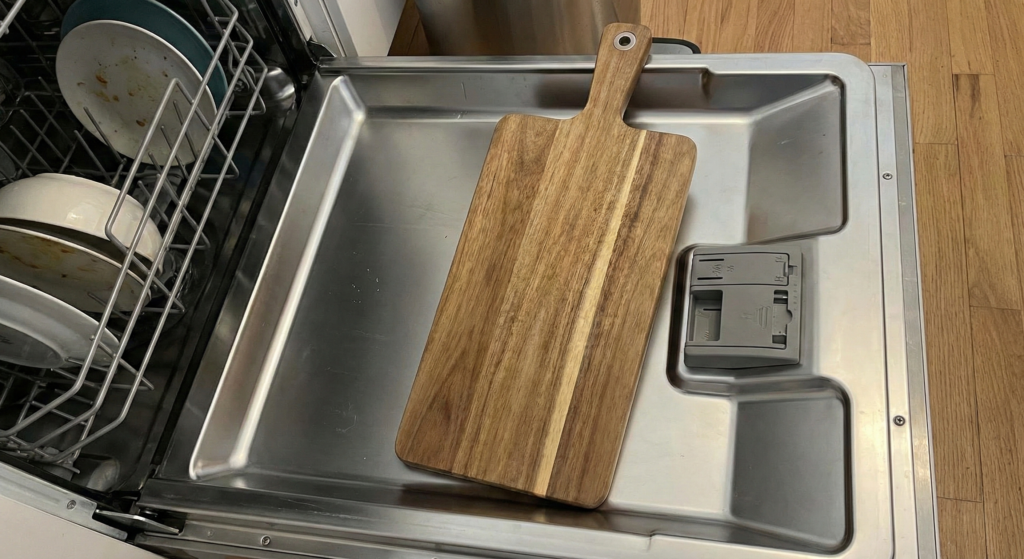
This is the #1 cause of undissolved pods. You loaded a tall cutting board, a cookie sheet, or a large dinner plate right in front of the soap dispenser. When the machine’s computer told the dispenser door to pop open, the door hit the cutting board and stayed shut. Always ensure the area immediately in front of the dispenser is clear.
2. Wet Dispenser Syndrome
As mentioned in Step 2, if the dispenser cup was wet from yesterday’s cycle, the pod glued itself to the plastic. Take a paper towel and wipe the little cup totally dry before you drop a new pod in.
3. Faulty Inlet Valves (No Water)
If the pod is sitting in the bottom of the tub completely dry and untouched, your dishwasher might not be filling with water at all. This usually means a float switch is stuck (often from gunk buildup) or the water inlet valve has failed. That is when you pick up the phone and call a repair tech.
Final Thoughts from the Workbench
Dishwasher pods are an incredible convenience, and when used correctly, they do a fantastic job of keeping your glassware sparkling and your plates sanitized. Just remember the golden rules: keep your hands dry, never use more than one, and always put it in the designated dispenser.
If you’re dealing with heavily soiled dishes and the pods just aren’t cutting it, do yourself a favor: buy a cheap box of powdered detergent and try the “pre-wash” method I mentioned above. You might be shocked at how well your machine can actually perform.
Are you dealing with a stubborn dishwasher issue or trying to figure out if your machine is finally giving up the ghost? Drop a comment below and let me know what’s going on—I’m happy to help you troubleshoot!